
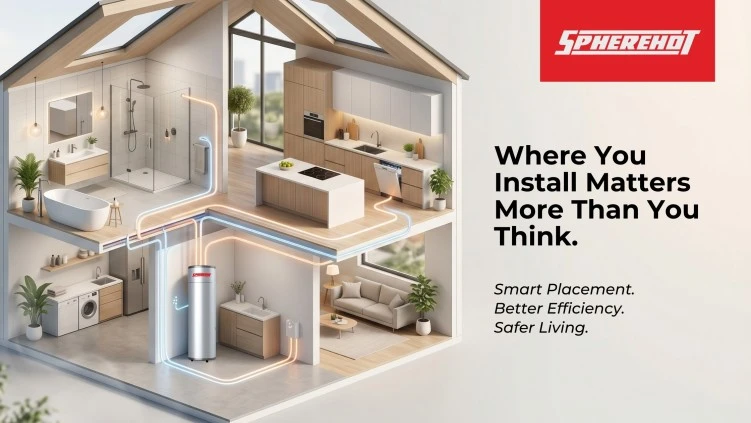
Buying a quality water heater is a wise decision, but installing it at the right location at home becomes a wiser decision when it enhances the convenience while impacting the energy efficiency, safety, and maintenance cost.
1. Water usage points to be as close as possible to the water heater fixture. This will reduce the heat loss of water during transit, and reduces waiting time, directly impacting energy saving.
2. Most importantly, install the heater centrally if multiple outlets are used at a time, but in larger homes stick with multiple smaller water heaters.
3. In case, you are looking forward to installing a gas water heater, ventilation can’t be overlooked. Make sure, the water heater has access to fresh air required for combustion, and is away from flammable materials.
4. For electric heaters, make sure they are installed in moisture resistant environments.
5. Periodic servicing is important for maintaining the life of the appliance. For convenience during flushing, inspection and repairs, install the water heater in areas with easy access to value and connections. This management of space before installation leads to quick detection of leaks and faults and allow access of technician to work.
6. Storage water heater units become heavy when filled, so they need to be installed on strong load bearing walls. In case of floor mounted units, make sure to avoid movement and vibration prone areas.
7. Majorly, water heaters are installed in water supply places with adequate drainage, still to minimise the potential damage due to a leak, install the appliance in areas with floor drainage. Avoid installing the unit directly above the bedroom or the electric panels.
8. Water heater installation can be decided based on ventilation and climatic conditions. Indoor installations in bathrooms near windows are preferred in apartments and urban settings. For tankless or weatherproof units, outdoor installation is required; the water heater still needs to be protected from rain, dust, and extreme temperatures.
9. While installing the water heater, the existing infrastructural features need to be considered. Proper grounding and circuit capacity, as well as easy access to plumbing lines, are to be factored in.
10. Instant water heaters are suitable for the kitchen, while storage units can be considered for bathrooms. In larger homes, a centralised unit can be installed in the basement.
11. Water heaters that generate operational noise should be installed in concealed cabinets and away from the bedroom and study.
12. Insulated pipes should be used to reduce heat loss in extremely cold zones.
An efficient water heater is one that balances energy needs, safety and practical installation. Placement of a water heater can be affected by home layout, heater type, and usage patterns. Reduced heat loss, minimised water wastage, and efficient energy use begin with where you install the system.
